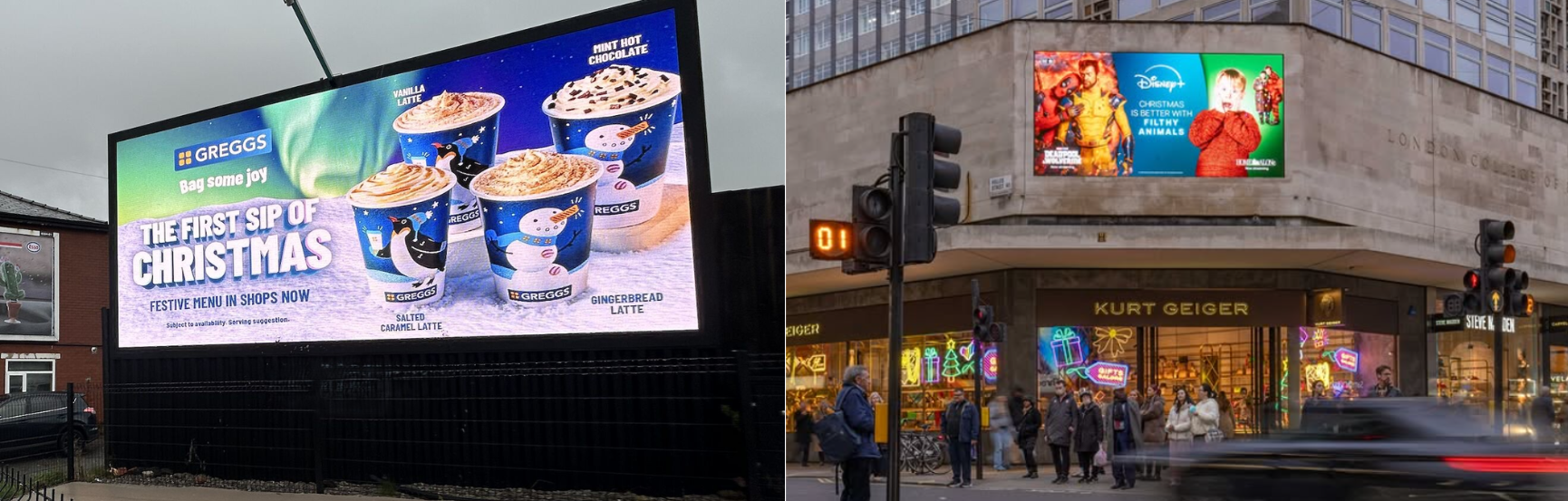
Maximise Impact Over Christmas
With Unmissable Roadside Billboards
Christmas is the busiest and most competitive time of year for retailers and advertisers. Shoppers make more trips, spend more time on the roads, and are constantly exposed to online messaging. In this crowded environment, roadside out-of-home (OOH) advertising helps you stand out by providing visibility and, unavoidable presence along with the routes people take for shopping, commuting, and visiting family. With the flexibility to run bold creative and update the digital formats in real time, roadside billboards keep brands top-of-mind throughout the festive season.
Understanding Festive Consumer Behaviour
December is dominated by shopping and travel. Car travel is central to this activity. In 2024, drivers were expected to make 29.3 million getaway journeys in the week before Christmas Day, this is the highest figure in over a decade. Increased congestion and slower average speeds mean more time on the road, resulting in greater exposure to roadside advertising. Billboards intercept these everyday journeys, putting brands in front of audiences at scale during the most spend-ready period of the year.
Choosing the Right Locations
The impact of roadside advertising is greatest where consumers are most active, making the choice of billboard location crucial. Regional sites offer high visibility on everyday routes without the advertising clutter found in London. Focus on arterial roads into towns, approaches to supermarkets and retail parks, and commuter corridors; these are the hotspots for December journeys, from weekly food shops to last-minute present runs. Placing billboard campaigns in these regional areas ensures brands are seen at the moments that matter, close to where shoppers spend.
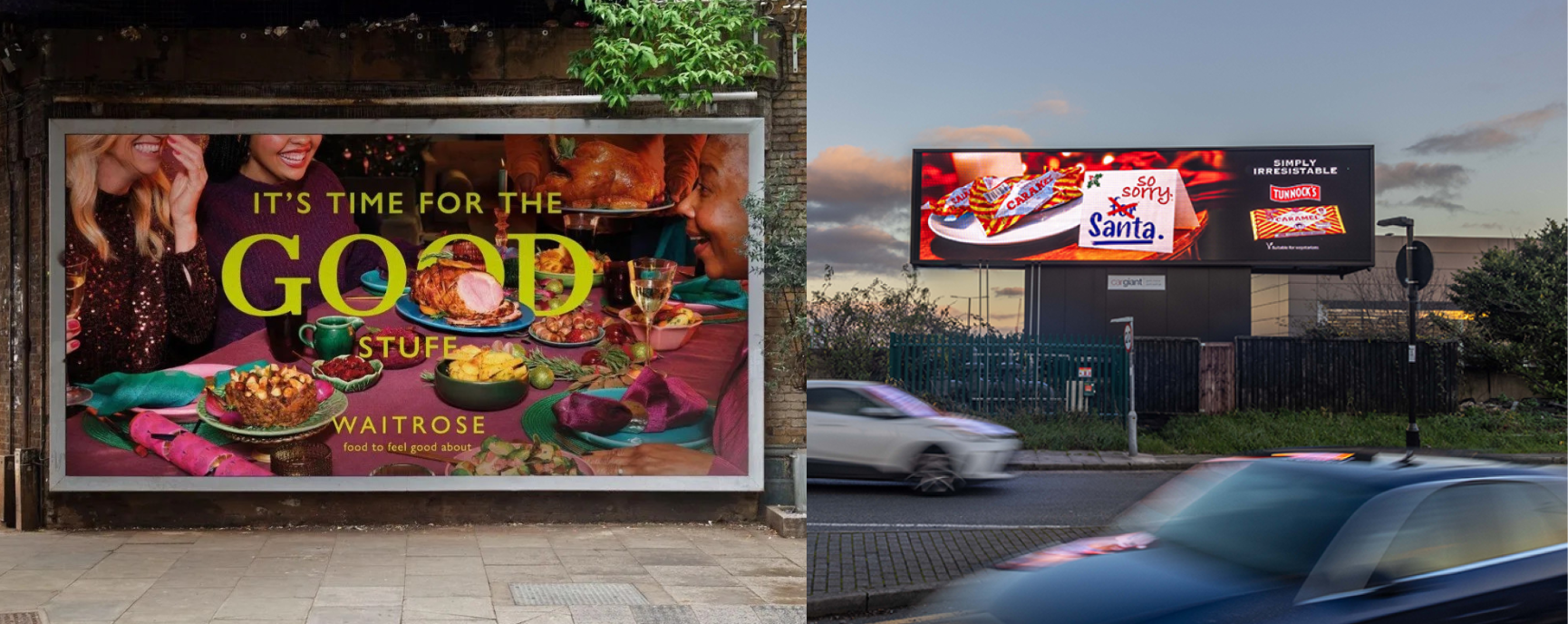
Keep Your Creative Clear and Seasonal
Drivers and passengers have only seconds to absorb a message, so creatives must be simple and eye-catching. Use large fonts, uncluttered layouts, and bold colours when designing the perfect billboard artwork. At Christmas, this is an opportunity rather than a limitation. Seasonal design cues, familiar Christmas imagery, traditional colours, and festive taglines help build anticipation in the weeks leading up to the holiday. By mid-December, shifting towards last-minute offers or countdown messages keeps campaigns relevant as shoppers make repeat trips. Digital roadside formats add flexibility, allowing creatives to change with the weather, time of day, or proximity to Christmas Eve. Localizing the message by referencing nearby locations or naming a town makes the campaign feel personal and timely.
Sync Roadside Advertising with Other Campaigns
Roadside advertising is most effective when it supports the broader festive marketing plan. Billboards build awareness at scale, while digital channels capture intent and drive purchases. Consistency across channels is key; the same product image, offer, or call to store should appear everywhere, from roadside posters to mobile ads. OOH has been shown to increase the effectiveness of other media. Industry research highlights improved recall and stronger response rates when OOH runs alongside online, social, and search campaigns. The sequence is clear: a driver sees the brand on the roadside, recognises it later on their phone, and is more likely to act. This cross-channel reinforcement is especially powerful at Christmas, when attention is fragmented. A roadside presence ensures the brand stands out and primes shoppers before they reach the checkout.
Timing and Planning
Christmas advertising is not a single moment; it builds in phases, and roadside campaigns should reflect that. Many shoppers begin purchasing in November, with the first week of December bringing a sharp rise in supermarket and retail trips. This is the ideal window to establish brand presence and build anticipation. Momentum accelerates in mid-December, as households make frequent return visits for top-up shopping. In the final week before Christmas Eve, road usage peaks as people travel for last-minute gifts and family getaways. Keeping campaigns live across the festive break ensures visibility during this period of heightened activity. Digital roadside formats add further flexibility, allowing advertisers to adapt their creative as the season progresses. Early messages can focus on brand awareness, while later executions can highlight specific offers, countdowns, or store directions.
Measuring Campaign Success
Clear objectives are essential for any Christmas campaign. Define success at the outset, whether that means brand recall, increased store visits, voucher redemptions, or sales growth. Regional roadside OOH can be measured against hard data. Store footfall and sales figures can be compared in areas exposed to billboards versus those without coverage. Voucher codes and trackable offers provide further evidence of impact. Digital roadside formats offer additional control, allowing campaigns to be monitored and adjusted in real time. Combined with seasonal benchmarks that show uplifts in recall and purchase intent when OOH is used, advertisers have a clear case for the role of roadside media in the Christmas marketing mix.
To Wrap Up
Christmas is the most competitive period for advertisers, but also the time of greatest opportunity. Regional roadside OOH connects with people when they are most active and most ready to spend. By selecting the right locations, keeping creative festive and clear, aligning activity with wider campaigns, and planning across the full December period, brands can achieve cut-through in a crowded market. With a sustainable network and the ability to update creative in real time, roadside billboards provide advertisers with a powerful and flexible platform to engage millions of shoppers throughout the festive season.